Why Do Hockey Players Tape Their Sticks?
From youth leagues to the NHL, almost every hockey player tapes their stick. Here's why—and how to do it right with proper cloth hockey tape.
Quick Answer: Hockey players tape their sticks for grip on the knob, puck feel on the blade, moisture protection, and durability. Tape transforms a bare composite or wood stick into a customized tool for better control.
The 5 Reasons Hockey Players Tape Their Sticks
Walk into any rink locker room and you'll see rolls of hockey tape everywhere. Stick taping isn't optional—it's essential. Here's why every player does it:
1. Improved Grip on the Knob
The top of your stick (the knob) gets taped to prevent your hands from slipping. During faceoffs, one-handed plays, and poke checks, a taped knob gives you secure control. Players build up layers of tape to create a custom-shaped grip that fits their hand perfectly.
- • Prevents stick from sliding out of gloves
- • Creates a larger surface area for your top hand
- • Absorbs sweat and moisture
- • Allows personalized knob shape and size
2. Better Puck Feel on the Blade
Tape on the blade adds texture and cushion that bare composite or wood can't match. When the puck hits a taped blade, you feel it better—which means better stickhandling, passing, and shooting control.
- • Cloth texture grips the puck
- • Cushions puck impact for softer hands
- • Creates consistent friction for saucer passes
- • Improves shot release and accuracy
3. Moisture Protection
Hockey blades constantly contact ice, snow, and water. Tape creates a protective barrier that keeps moisture from seeping into the blade material. This is especially important for composite sticks, where water infiltration can degrade performance.
Pro Tip: Apply stick wax over your blade tape to repel even more water and ice buildup.
4. Blade Durability
Tape acts as a sacrificial layer. Instead of your blade taking direct hits from pucks, ice, boards, and other sticks, the tape absorbs the abuse. When it wears out, you simply re-tape—far cheaper than replacing a $300 stick.
5. Customization and Consistency
Every player has preferences. Some like heavy tape coverage, others prefer minimal. Some build thick knobs, others keep them slim. Tape lets you customize exactly how your stick feels and performs—and repeat that setup stick after stick.
Blade Taping vs Knob Taping
| Feature | Blade Tape | Knob Tape |
|---|---|---|
| Primary Purpose | Puck feel & blade protection | Hand grip & control |
| Tape Width | 1" (standard) | 1" or 1.5" (for buildup) |
| Re-tape Frequency | Every 2-4 games | Every 2-4 weeks |
| Coverage | Heel to toe (full or partial) | Top 4-8 inches of shaft |
| Add Wax? | Yes—repels water & ice | Optional—for extra grip |
What Kind of Tape Should You Use?
Use cloth hockey tape—not athletic tape, duct tape, or electrical tape. Hockey tape is specifically engineered for sticks with:
- • Rubber-based adhesive that works in freezing temps
- • Cloth backing that tears by hand and grips pucks
- • Minimal residue when removed
- • Moisture resistance for ice conditions
Don't Use Athletic Tape: Athletic tape is made for skin and injuries—it fails in cold, leaves sticky residue, and has no puck grip. See our full comparison: Hockey Tape vs Athletic Tape: Are They the Same?
Do NHL Players Tape Their Sticks?
Yes—virtually every NHL player tapes their stick. Equipment managers travel with cases of tape and wax. Players are extremely particular about their tape jobs; many have the same ritual before every game.
Some NHL preferences:
- • Sidney Crosby: Full blade coverage, white tape
- • Alex Ovechkin: Black tape on blade for puck camouflage
- • Connor McDavid: Minimal blade tape for maximum puck feel
Get Professional-Grade Hockey Tape
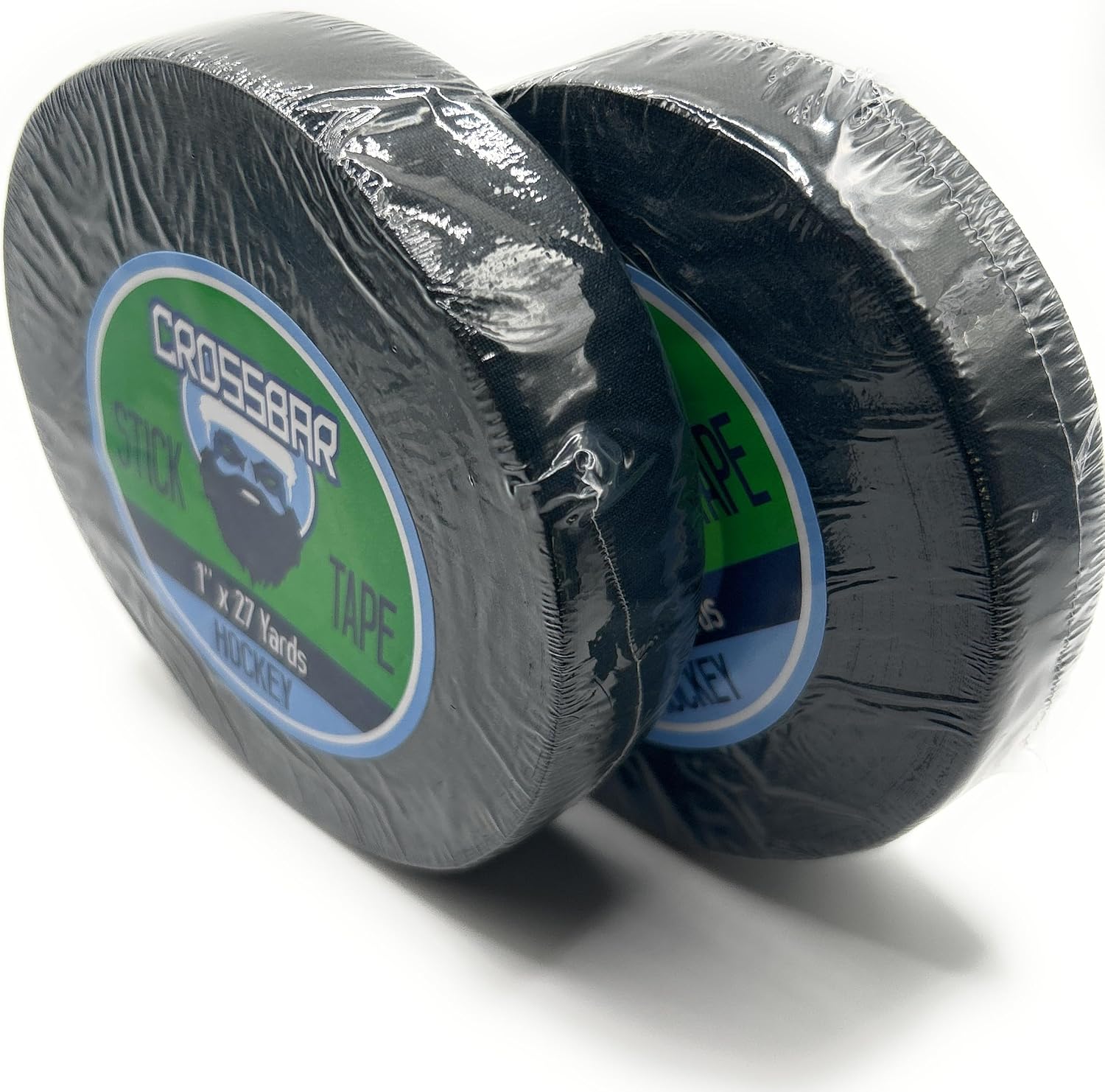
Crossbar cloth tape tears by hand, sticks in cold, and gives pro-level puck feel.
Frequently Asked Questions
Why do hockey players tape their sticks?
Hockey players tape their sticks for five key reasons: (1) better grip on the knob so hands don't slip, (2) improved puck feel and control on the blade, (3) moisture protection for the blade, (4) customization of friction and tackiness, and (5) blade durability against ice, pucks, and boards.
Why do you tape a hockey stick blade?
Taping the blade improves puck feel by adding cushion and texture, protects the composite or wood from moisture and abrasion, and gives consistent friction for passes and shots. The cloth backing grips the puck better than bare blade material.
Why do hockey players tape the knob?
Taping the knob creates a thicker, grippier top hand grip. It prevents the stick from slipping out during one-handed plays, faceoffs, and poke checks. Players build up custom-shaped knobs to fit their hand.
What kind of tape do hockey players use?
Hockey players use cloth hockey tape—not athletic tape or duct tape. Cloth hockey tape has a rubber-based adhesive that works in cold, tears by hand, and leaves minimal residue. Athletic tape is designed for skin, not equipment, and fails on ice.
How often should you re-tape a hockey stick?
Most players re-tape the blade every 2-4 games or whenever the tape frays, gets waterlogged, or loses grip. Knob tape lasts longer—usually several weeks unless it gets sweaty or torn.
Does hockey tape color matter?
Black tape hides puck marks and may disguise the puck from goalies. White tape shows puck position clearly and can help with visual tracking. Performance-wise they are the same—pick based on preference. See our black vs white tape guide for more.
Related Articles
- Hockey Tape vs Athletic Tape: Are They the Same? — Why you should never use athletic tape on sticks
- How to Properly Tape a Hockey Stick — Step-by-step blade and knob techniques
- Black vs White Hockey Tape — Which color is best for your game?
Final Thoughts: Taping your stick isn't just tradition—it's functional. Better grip, better feel, better protection. Invest in quality cloth hockey tape and stick wax, and your game will thank you.