Hockey Tape vs Athletic Tape: What's the Difference?
Searching “hockey tape vs athletic tape” or “is hockey tape the same as athletic tape?” Here’s the clear answer—plus when to use real cloth hockey tape on your stick.
Quick Answer: Hockey tape is specifically designed for equipment use with cloth backing, cold-resistant adhesive, and controlled tackiness. Sports/athletic tape is made for skin support with elastic backing and medical-grade adhesive. They're NOT interchangeable.
Is Hockey Tape the Same as Athletic Tape?
No. Athletic tape (sports tape) is built to support skin and joints. Hockey tape is cloth-backed equipment tape that keeps grip in cold, wet conditions. They look similar in the tape aisle, but they are not interchangeable on a stick blade. If you are comparing athletic tape vs hockey tape, choose hockey tape for sticks and athletic tape only for injuries.
The Key Differences At a Glance
| Feature | Hockey Tape | Sports/Athletic Tape |
|---|---|---|
| Primary Use | Equipment (sticks, shin guards) | Injury support on skin |
| Backing Material | Cloth/cotton | Elastic/synthetic |
| Adhesive Type | Rubber-based (cold resistant) | Zinc oxide (skin safe) |
| Temperature Range | Works in freezing temps | Room temperature only |
| Moisture Resistance | Excellent (ice/water) | Poor (loosens when wet) |
| Tear Method | Tears by hand | Requires scissors |
| Residue | Minimal/none | Leaves sticky residue |
| Cost per Roll | $2-5 | $3-8 |
What Makes Hockey Tape Special?
1. Cloth Backing for Durability
Hockey tape uses a tightly-woven cloth or cotton backing that:
- • Resists fraying even after repeated puck impacts
- • Tears cleanly by hand for quick tape jobs
- • Provides texture that helps grip the puck
- • Withstands abrasion from ice, boards, and sticks
2. Cold-Resistant Adhesive
The rubber-based adhesive is engineered to work at freezing temperatures:
- • Maintains stickiness at 32°F and below
- • Won't harden or crack in cold environments
- • Resists moisture from ice and snow
- • Stays put during games without peeling
3. Controlled Tackiness
Hockey tape provides the perfect balance:
- • Tacky enough to grip the puck for better control
- • Not too sticky that puck gets caught on release
- • Can be enhanced with stick wax for more grip
- • Consistent feel shot after shot
What is Sports/Athletic Tape Designed For?
Athletic tape (also called athletic training tape) is medical-grade tape designed for:
- • Injury prevention - Taping ankles, wrists, fingers
- • Joint support - Limiting range of motion to prevent re-injury
- • Muscle support - Compression and stabilization
- • Skin application - Designed to be applied directly to skin
Key characteristics:
- • Zinc oxide adhesive (gentle on skin, hypoallergenic)
- • Often has stretch for compression
- • Tears poorly or requires scissors
- • Loses adhesion when wet or in cold
- • Leaves sticky residue on equipment
Why You Shouldn't Use Athletic Tape for Hockey
Problem #1: Poor Performance in Cold
Athletic tape adhesive is formulated for body temperature (98.6°F). At ice temperature (32°F), it becomes hard and loses tackiness, causing it to peel off your stick mid-game.
Problem #2: Moisture Failure
Athletic tape is designed for dry skin, not ice rinks. Water and ice cause the adhesive to break down, leading to tape unraveling during play.
Problem #3: Wrong Texture
Athletic tape is smooth and elastic. Hockey tape's cloth texture is essential for gripping the puck properly. Athletic tape provides no puck feel.
Problem #4: Sticky Residue
When you remove athletic tape, it leaves sticky adhesive residue on your stick that's difficult to clean. Hockey tape removes cleanly.
What About Other Tape Types?
Duct Tape
Don't use for hockey. Duct tape is too rigid, has poor puck feel, tears terribly, and leaves impossible-to-remove residue. It's designed for sealing and repairs, not sports equipment.
Electrical Tape
Don't use for sticks. Electrical tape is vinyl-backed and designed for insulation. It's too smooth, has no grip, and becomes brittle in cold. Some players use it for knob wrapping, but cloth hockey tape is superior.
Shin Guard Tape (Clear Tape)
Different purpose but hockey-specific. Shin guard tape is clear polyethylene tape designed to hold shin guards in place. It's not for stick blades but serves an important role in equipment management.
Types of Hockey Tape
Cloth Hockey Tape
Standard tape for stick blades and knobs.
- • 1" wide for blades
- • 1.5" wide for knobs
- • Available in black, white, colors
- • Most common choice
Friction Tape
Extra-tacky tape for maximum grip.
- • Very sticky surface
- • Often black
- • Used on knobs for grip
- • Can be used under cloth tape
Cost Comparison: Is Hockey Tape Worth It?
Let's compare the real cost:
Hockey Tape (Cloth):
$2-5 per roll. One roll tapes 3-4 sticks. Cost per stick: $0.75-1.25
Athletic/Sports Tape:
$3-8 per roll. Doesn't work properly on ice, wastes time re-taping. Cost per stick (including failures): $2-4
Bottom Line:
Hockey tape is actually cheaper and performs better. There's no reason to use athletic tape for hockey equipment.
Get Professional-Grade Hockey Tape
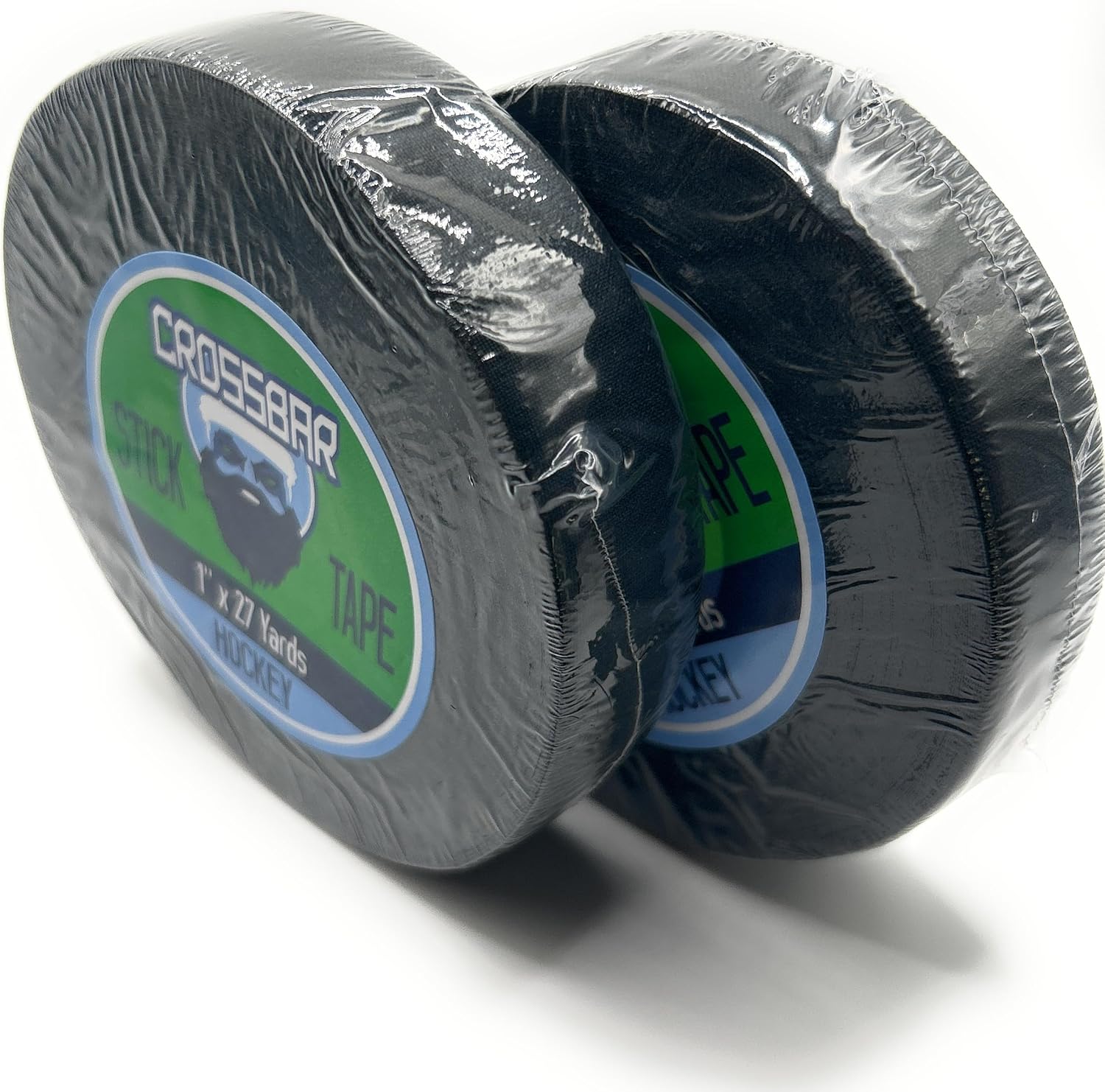
Crossbar cloth tape is designed specifically for hockey with tear-by-hand convenience!
Frequently Asked Questions
Can I use athletic tape instead of hockey tape?
Not recommended. Athletic tape is designed for skin and injuries, not hockey sticks. It lacks the durability, tackiness, and cold-resistance of hockey tape. Hockey tape won't leave residue and tears by hand, while athletic tape requires scissors and leaves sticky residue.
What makes hockey tape different from regular sports tape?
Hockey tape uses cloth backing for durability, rubber-based adhesive that works in cold, and is designed to grip pucks while resisting ice/moisture. Sports tape uses synthetic/elastic backing, zinc oxide adhesive for skin, and is meant for injury support not equipment wrapping.
Is hockey tape the same as athletic tape?
No. Hockey tape is cloth equipment tape with cold-resistant adhesive for sticks and pucks. Athletic tape is elastic, skin-safe tape for injury support—it slips when wet, leaves residue on composites, and ruins puck feel.
Can you use hockey tape as athletic tape?
No—do not use hockey tape on skin for sprains or support. It is not designed as medical tape. Use athletic tape for body, hockey tape for gear.
What is hockey tape used for?
Blade and knob wrapping for grip and puck control, blade moisture protection, and securing pads or socks. See our how to tape a hockey stick guide for technique.
Is hockey tape the same as duct tape?
No. Duct tape is too rigid, leaves residue, doesn't provide proper puck feel, and tears poorly. Hockey tape is specifically engineered for stick blades with controlled tack, clean removal, and optimal puck grip. Never use duct tape on hockey sticks.
Final Thoughts: Hockey tape isn't just "another type of tape" - it's purpose-built for the unique demands of hockey. The cloth backing, cold-resistant adhesive, and controlled tackiness make it irreplaceable. Don't compromise your game with the wrong tape. Always use proper hockey tape for equipment.