Choosing the Right Hockey Skate Laces
Everything you need to know about selecting hockey laces that match your skates, playing style, and performance needs.
Quick Summary: The right hockey laces improve skate fit, prevent injury, and enhance performance. This guide covers length, material, waxed vs unwaxed, and color options.
Why Hockey Laces Matter
Quality hockey laces are more important than many players realize. The right laces provide:
- Proper Skate Fit: Secure your foot in the optimal position for power transfer
- Injury Prevention: Reduce lace bite and ankle discomfort
- Consistent Tension: Maintain tight lacing throughout games
- Durability: Withstand the wear and tear of regular skating
- Performance Enhancement: Better energy transfer from leg to ice
Determining the Right Length
The most critical factor when choosing hockey laces is getting the correct length. Laces that are too short won't reach the top eyelets, while laces that are too long create tripping hazards.
Standard Hockey Skate Lace Lengths
| Skate Size | Number of Eyelets | Recommended Length |
|---|---|---|
| Youth 6-9 | 7-8 eyelets | 72" (183cm) |
| Youth 10-13 | 8-9 eyelets | 84" (213cm) |
| Junior 1-5 | 8-9 eyelets | 96" (244cm) |
| Adult 6-8 | 9-10 eyelets | 108" (274cm) |
| Adult 8.5-11 | 10-11 eyelets | 120" (305cm) |
| Adult 11.5+ | 11+ eyelets | 130" (330cm) |
Pro Tip: The Eyelet Count Method
Count the number of eyelets on ONE skate and multiply by 12. This gives you the minimum length needed. Add 10-15 inches for proper bow tying!
Waxed vs Unwaxed Laces
One of the most important decisions is choosing between waxed and unwaxed laces.
Waxed Laces
Best For: Competitive players, those who want maximum hold
Advantages:
- Stay tight throughout entire games
- Don't loosen during hard skating
- More durable and water-resistant
- Preferred by most professional players
Disadvantages:
- Can be harder to adjust mid-game
- May cause lace bite if too tight
- Take longer to break in
Unwaxed Laces
Best For: Recreational players, those with sensitive feet
Advantages:
- Easier to tie and adjust
- More comfortable for casual skating
- Less likely to cause lace bite
- Better for players learning to skate
Disadvantages:
- May loosen during play
- Less durable over time
- Can absorb moisture and freeze
Material Types
Cotton Cloth Laces
The traditional and most popular choice. Cotton cloth laces offer the best combination of durability, grip, and comfort. They hold knots well and are available in both waxed and unwaxed varieties.
Polyester Laces
More water-resistant than cotton and extremely durable. They're a good choice for outdoor rinks or players who skate in wet conditions.
Molded Tip Laces
Feature reinforced plastic tips that make threading through eyelets easier. Recommended for all lace types as they prevent fraying.
Choosing Your Color
While color is largely personal preference, there are some practical considerations:
- White: Classic look, shows dirt easily, popular with traditional players
- Black: Hides wear and marks, professional appearance
- Yellow: High visibility, easy for coaches to check if laces are properly tied
- Team Colors: Match your team uniform for coordinated appearance
- Bold Colors: Express personality, popular with youth players
When to Replace Your Laces
Replace your hockey laces when you notice any of these 5 signs you need new skate laces:
- Fraying or breaking at stress points
- Loss of wax coating (for waxed laces)
- Difficulty maintaining tight lacing
- Visible wear on the lace material
- At the start of each new season (recommended)
Premium Hockey Skate Laces
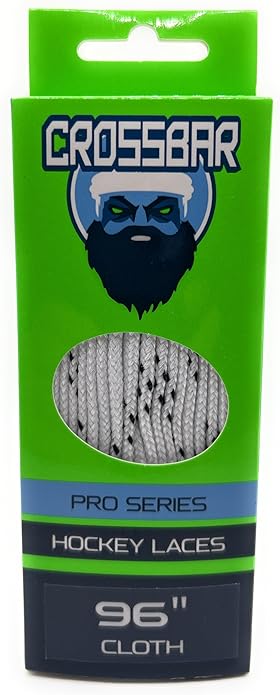
Crossbar Hockey offers high-quality cloth laces in multiple colors and lengths!
Pro Lacing Tips
Different Tensions for Different Areas
Lace looser at the toe for flexibility, tighter at the ankle for support, and slightly looser at the top to prevent lace bite.
The Lock Technique
After lacing through the second-to-last eyelet, loop the lace through itself before the final eyelet. This "locks" the lace and prevents loosening.
Break In New Laces
New waxed laces are stiff. Stretch them out by pulling firmly before first use to make lacing easier.
Frequently Asked Questions
Should I get waxed or unwaxed laces?
For competitive play, choose waxed laces for better hold and durability. For recreational skating or if you have sensitive feet, unwaxed laces offer more comfort and easier adjustment.
How do I measure my skates for lace length?
Count the eyelets on one skate, multiply by 12, then add 10-15 inches. Or, bring your old laces to the store and get the same length.
Can I use regular shoelaces on hockey skates?
Not recommended. Hockey laces are designed to withstand the specific stresses of skating, stay tied during intense activity, and resist moisture. Regular shoelaces will break quickly.
How often should I replace my hockey laces?
At minimum, replace them at the start of each season. Players who skate frequently should replace them every 2-3 months or when showing signs of wear. See our full guide on when to replace hockey laces.
Final Thoughts: Quality hockey laces are an inexpensive upgrade that significantly impacts your skating performance. For new players building a gear setup, see our complete hockey equipment checklist.